

Equality, Diversity & Inclusion
EDI Statement & 2021 Kennedy Diversity Report
ALSGBI Statement
ALSGBI Equality, Equity, Diversity and Inclusion Statement
ALSGBI is an organisation that strives for excellence in all areas. We also seek to represent our membership, the wider surgical workforce, and our patient population with fairness. We recognise that equality, equity, diversity, inclusion, and an awareness of intersectionality must be at the core of our structure and policy if this is to be achieved.
ALSGBI is currently working alongside other organisations such as ACPGBI, AUGIS, ASGBI, ASiT, RCS WINS, PRISM and BOMSS as part of the Surgical EDI Network. We are united by shared values and a common aim; support, representation, respect and equal opportunities for surgical healthcare providers with differing experiences and characteristics, in order to facilitate and deliver optimal patient care.
The outcome of the RCS Eng. Kennedy Review highlighted the lack of diversity within the Royal College ecosystem and the need for the Surgical profession to not only reflect the society that we work in, but to foster an environment in which every kind of surgeon can thrive. As a pioneering body and standard for practice and training in minimal access surgery, ALSGBI recognises its significant role in the Surgical community and takes these recommendations seriously. We are committed to ensuring our activities are progressive, inclusive, and welcoming of cultural and cognitive diversity at every level.
To reflect ALSGBI’s aim of being an open-minded society that is representative of its wide-ranging membership and patient body, we have shared our 2021 aspirations and agenda for change. However, we know that words alone cannot achieve positive outcomes, so we have created a digital suggestion box on our website and pledge to embrace change, take action and be responsive to the variable needs and perspectives of those we engage with as an organisation.
Signatories
The ALSGBI Through the Keyhole podcast on Equality and Diversity is linked below:
2021 Kennedy Report
Summary of the 2021 Kennedy Report Recommendations
To send an EDI enquiry, please click HERE
Who is this report for?
Why?
A need for change?


In Detail
The Recommendations in Detail
Commit to the RCS England Vision, putting diversity at the heart of College strategy.
To be an inclusive, diverse, professional organisation committed to fairness, and anti-discrimination, supporting and promoting the highest professional/surgical standards and the best outcomes for patients in a spirit of respect and compassion – for patients and for each other.
Reform Target.
Within two Presidential terms the Leadership and Council will reflect the diversity of the wider medical workforce. That means within five to six years from now.
Reform Elections for Presidency.
The Council should present a slate of potential candidates for this prestigious role. The slate of candidates should be presented to whole Membership and then voted upon.
Reform Election for the Three Vice-Presidential Roles.
The Council should again present a slate of candidates for election by the Membership. If the two candidates with the highest votes are male, the third Vice-Presidential place should go the woman with the highest votes. This should be in place for 10 years only, to shift the dial on equality in leadership.
Reform Council.
- There should be three tiers of elected members
- Those entering surgery – four/six years
- Those at mid/senior level – (this cohort should be the largest in number – for Council to decide detail)
- Those in senior years of practice or retired
The Council should include representatives of Specialist Associations, Nominated Organisations and Lay Members. All should have voting rights.
It is hoped that the Specialist Associations will reform their organisations in keeping with the spirit of this report as that will have a real impact on the diversity of the composition of Council.
Reform Election Process, Appointments, Committees and Conduct.
Those standing for election should in their short electoral statement describe the positive difference not sameness that they will bring to Council. They should also commit to the Vision of the Royal College of Surgeons of England. There should be consistency and terms of reference for panels and committees and all should be diverse. The conduct of Council and Committee Meetings and every element of the College from committees to Exam Boards and the Board of Trustees should pledge to be respectful, value the ideas of others and make space for new and diverse voices.
Develop a clear SAS Strategy.
Work with the SAS Forum to create an overall action plan to give due recognition to the role of SAS practitioners.
FLAGSHIP PROJECT – Parents in Surgery.
The experience of parents, who are training to be surgeons or are busy surgeons in practice, is extremely challenging and stressful; it demands urgent attention. A Task Force should be established to work with Deaneries, Trusts and Hospitals to address more supportive structures and career paths. The work of the Task Force should feed into the restructuring planned by government.
Deliver a Study on Differential Attainment in Surgical Exams.
Make a clear principled statement up front that the current differentials are NOT the function of learner deficit. This firmly locates any study in the learning environment. This work should be undertaken with an independent academic partner with a declared intention that any gaps should be closed within five years of publication of the study. It should be fully resourced and prioritised.
Launch Two Annual Research Fellowships into Surgery, Diversity and Inclusion.
These fellowships should focus on under-developed areas in the body of evidence such as careers in surgery and the LGBT+ community, disabled surgeons and surgeons from disadvantaged backgrounds.
Support Diverse Grassroots Medical Organisations with Seed Funding.
Provide seed funding and/or support to grassroots organisations or collective efforts that seek to address diversity, equality and inclusion issues in surgery.
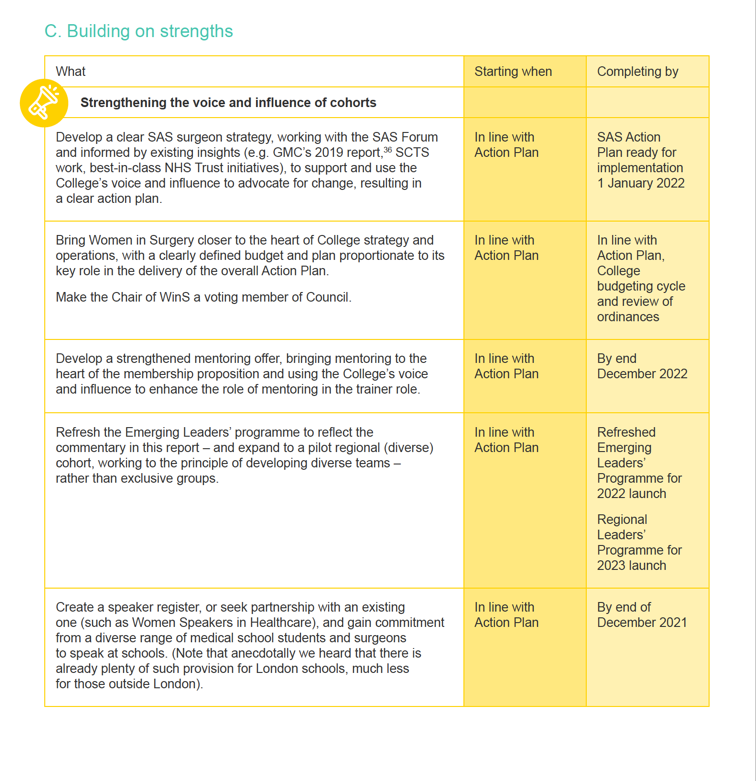
Build on the College's strengths.
- Bring Women in Surgery closer to the heart of College strategy and operations.
- Refresh the Emerging Leaders' Programme to reflect the recommendations in this Report. The end of the Firm structure within medicine, which provided a form of apprentice relationship between junior and senior surgeons, means that many young surgeons feel unsupported in their development. The College is the perfect home for Mentorship and one of the Vice-Presidents should have the specific role of developing a structured Mentorship scheme.
Data Collection, Monitoring and Career Tracking.
An organisation cannot know whether it is making progress on making opportunities available in a fair and inclusive way if there is inadequate collection of information. Proper processes for this collection and analysis of information must be put in place.
The Council will need to consider how to implement the recommendations of the Report as appropriate.
This is an extraordinary, career-defining opportunity and an extraordinary time in surgery – it could be by design rather than circumstance that this Review follows the Future of Surgery Commission.
College staff are already working to capacity and so investing in additional resources and creating adequate capacity for staff to understand, take on board and implement these proposals will be critical to success. We remind the College of both the strategic and moral importance of this work.